
Saharan Horned Viper
1- Appearance:
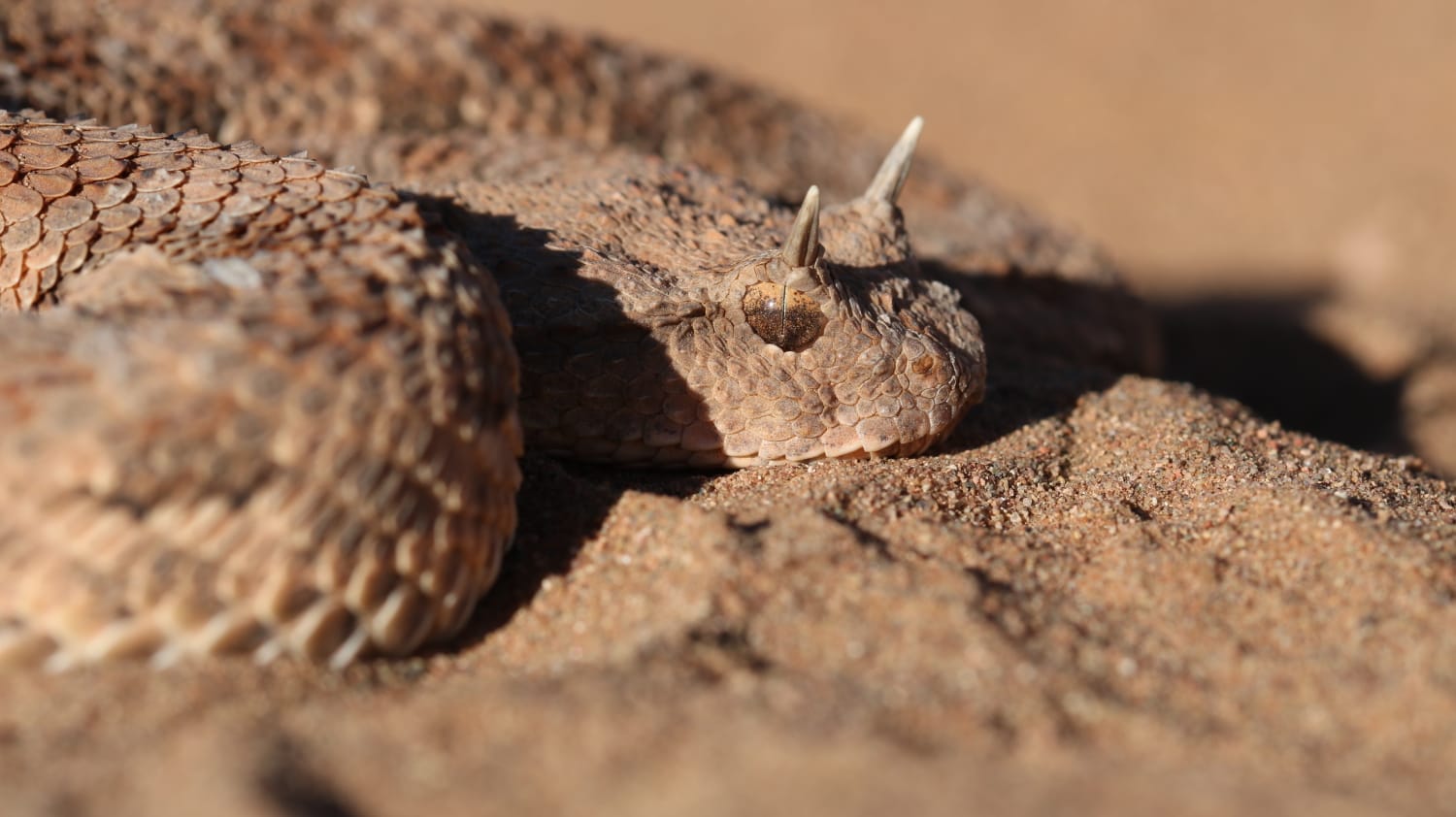
- A small, stocky desert snake, usually 30–60 cm long.
- Has a broad, triangular head with vertical pupils.
- Famous for its horn-like scales above each eye (some individuals may lack them).
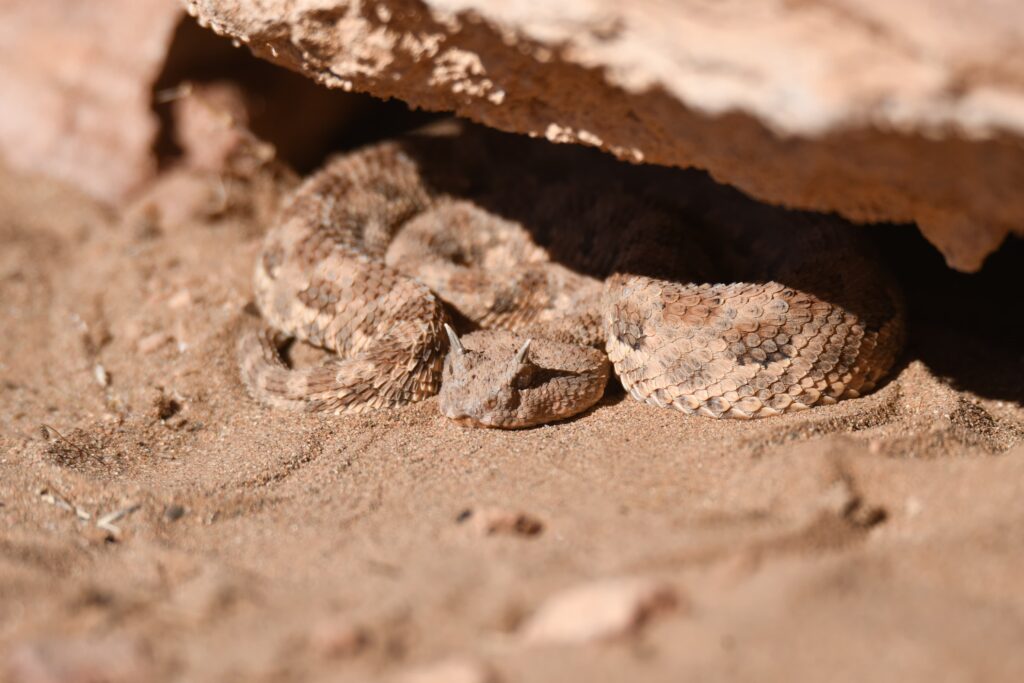
- Color ranges from yellow, pale gray, pink, or sandy brown, often with darker spots—perfect camouflage in desert sand.
- Covered in rough (keeled) scales that help it move in sand.
2- Habitat:
- Lives in deserts of North Africa and parts of the Middle East.
- Prefers dry, sandy areas with dunes, rocks, or sparse vegetation.
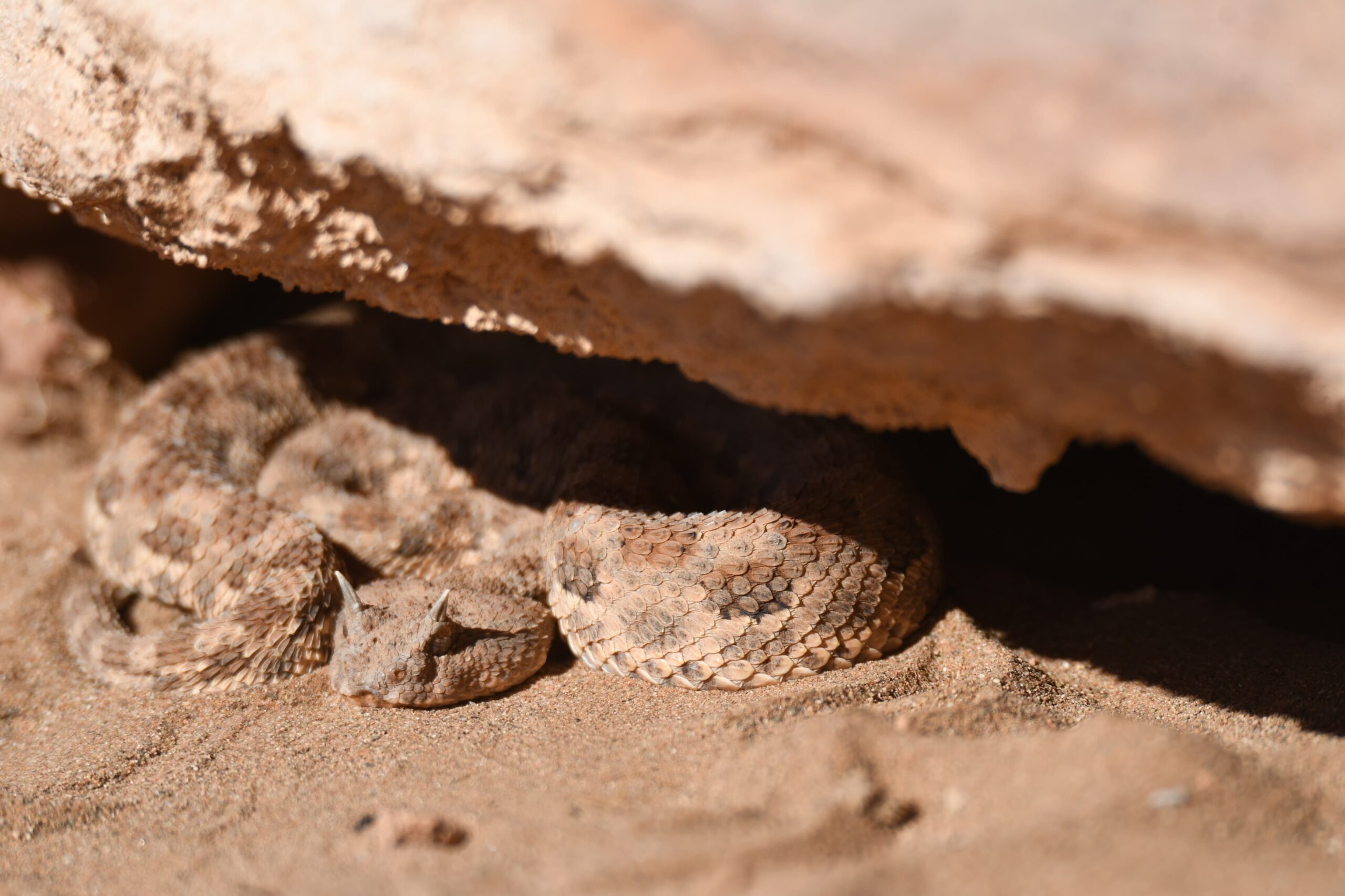
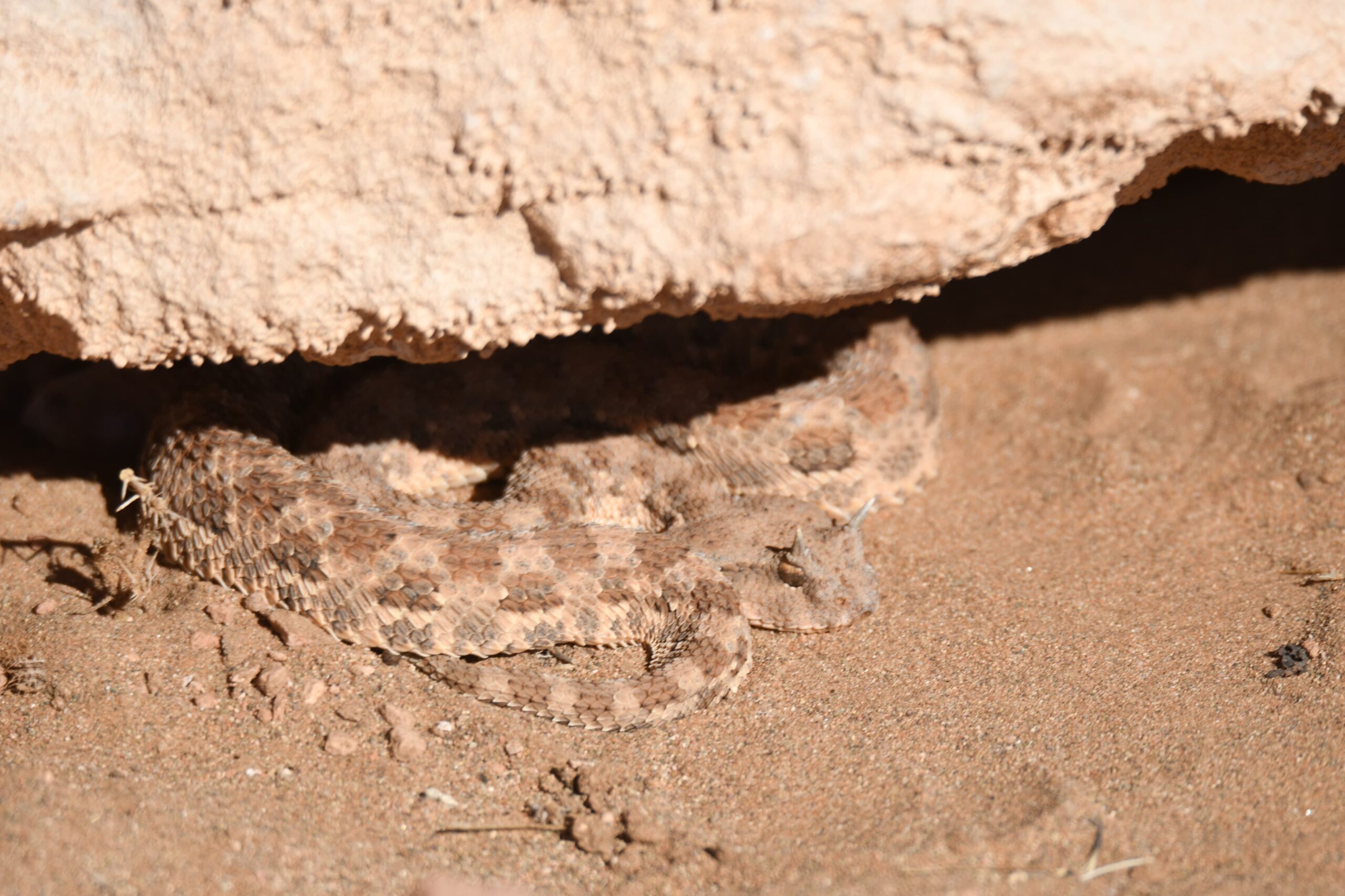
- Often found:Buried in sand, Under rocks ,In abandoned animal burrows
3- Diet:
- Carnivorous predator.
- Main food: Lizards, Small rodents, Birds
- Hunts by ambush, hiding under sand and striking quickly when prey comes close.
Encountering a Saharan horned viper in its natural habitat is a rare and fascinating experience for those exploring the vast desert landscapes of Morocco. Perfectly adapted to the harsh conditions of the Sahara, this elusive reptile is a true master of camouflage, often hidden beneath the sand with only its eyes and distinctive horns visible.
With its sandy coloration blending seamlessly into the dunes, the viper moves gracefully using a unique sidewinding motion, leaving delicate tracks across the desert surface. Mostly active at night, it spends the daytime buried in the cool sand, waiting patiently for the desert to come alive.
Spotting this iconic desert species is not only exciting but also offers a deeper appreciation of the incredible wildlife that thrives in Morocco’s arid regions. For nature lovers and adventurous travelers, the Saharan horned viper adds a touch of mystery and authenticity to any desert journey.
4- Behavior:
- Nocturnal (active at night).
- Solitary animal.
- Moves using sidewinding, a special movement across sand.
- Spends much of the day buried in sand with only eyes visible.
- Defense behavior: Hissing, Coiling into a C-shape, Rubbing scales to make a warning sound
- Venomous, but bites are rarely fatal to humans.
5- Breeding:
- Oviparous (lays eggs).
- Mating usually occurs around spring (April).
- Females lay 8–23 eggs.
- Eggs hatch after 50–80 days.
- Babies are independent from birth and reach maturity in about 2 years.
6- Conservation:
- Generally classified as Least Concern (not currently threatened).
- Population is stable, with no major global threats identified.
- Important ecological role:
- Controls rodent populations in desert ecosystems